Network services to connect the Public Cloud

Build scalable and modular architectures to connect cloud environments and on-premises infrastructures in a simple and controlled way.

GET IN TOUCH See how it works

The private network that connects Aruba Cloud resources

Network services represent the foundation of the Aruba Public Cloud architecture in which resources are distributed within an isolated space.

Connection between resources

Connect Virtual Data Centers, Kubernetes clusters, Databases, and Storage within the same private network.

Communication between services

Defines how resources communicate and collaborate with each other within the same application architecture.

Traffic and segmentation

Allows you to control network traffic through configurable rules and to separate different application layers in a structured way.

Hybrid Cloud Integration

Interconnects Public Cloud resources with advanced Hybrid Cloud architectures through services such as Hybrid Connect.

Why the VPC Network is central to cloud architecture

Dedicated network perimeter

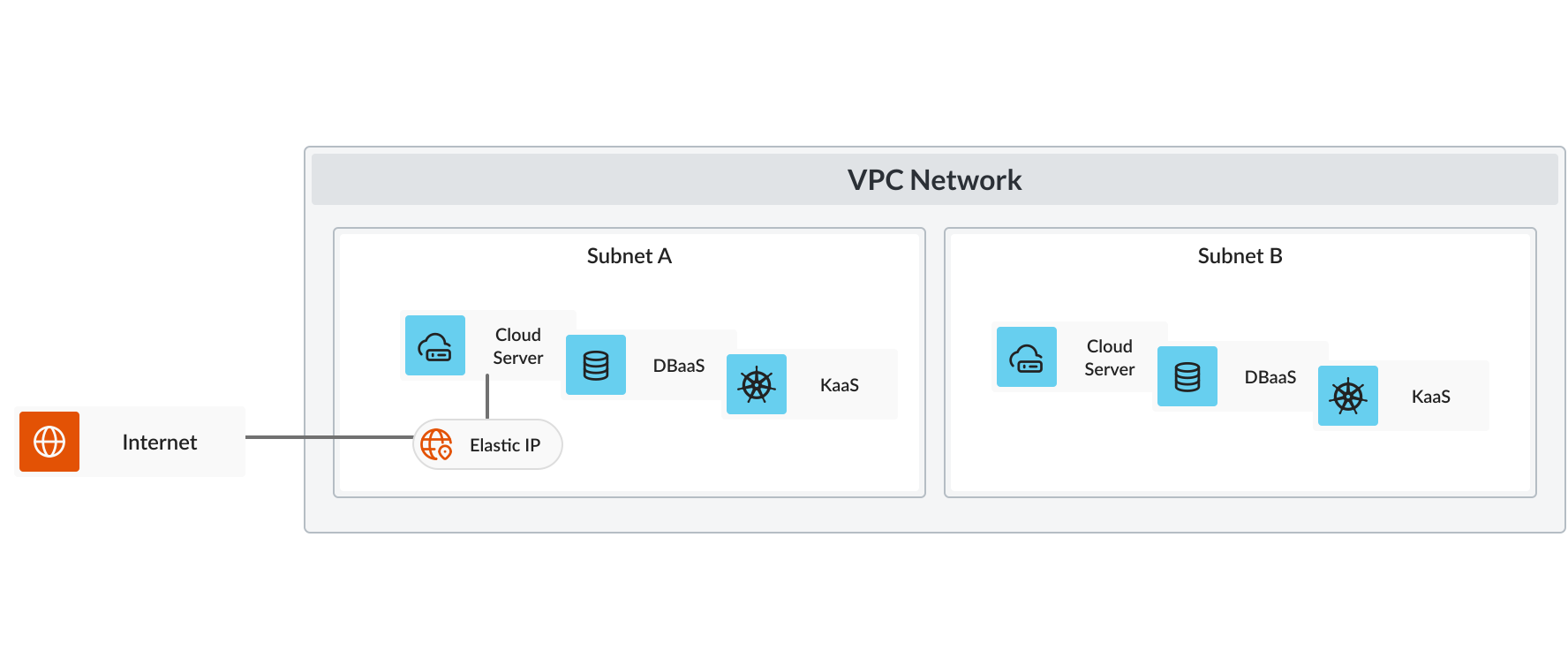
The VPC Network defines an environment with logical isolation that separates resources from other networks on the platform and allows you to distribute and connect them in a controlled way.

Control of access and communications

It allows you to manage how resources communicate with each other and which services can be exposed externally, maintaining control over traffic and access.

Infrastructure segmentation

Subnets and Security Groups allow you to organize different application layers, such as frontend, backend, and database, and separate network traffic flows between the components of the architecture.

Stable and managed connectivity

Elastic IPs allow you to associate static public IP addresses with resources accessible from the Internet, maintaining continuity in connections even when instances change.

VPC Network: the heart of networking in the Public Cloud

In the Virtual Private Cloud Network you can define private addressing, subnets, and access rules between resources, maintaining control over internal communications and connectivity to the outside.

Subnet

Segments into logical subnets to distribute resources and separate application layers.

Subnets allow you to organize Virtual Data Centers, Databases, and application services into distinct segments and control communication between the components of the architecture.

Security Group

Defines security rules for inbound and outbound traffic to and from resources.

Allows you to apply granular access policies and protect services with a firewall at the individual resource level, with rules based on IP address, protocol, and port.

Elastic IP

Associates a static public IP address with resources accessible from the Internet.

The Elastic IP remains assigned to the project even if a resource is modified or deleted, and can be reassigned to another instance to ensure continuity in connections.

VPC Network, discover how it works

Peering: private connection between VPC Networks

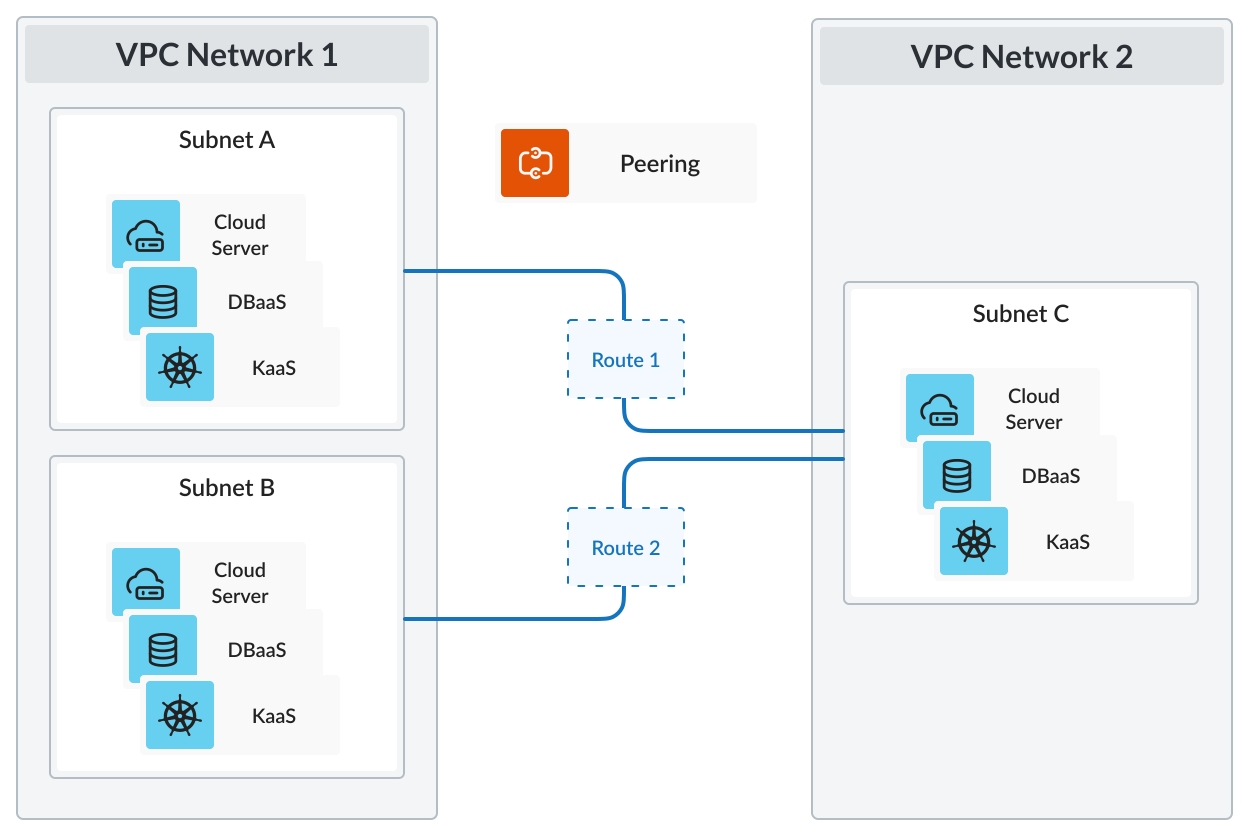
Peering allows you to connect two or more VPC Networks through a direct private connection, enabling resources distributed across separate environments to communicate with each other securely.

Traffic remains within the cloud infrastructure and does not traverse the public Internet, ensuring greater control, isolation, and stable performance.

  • Allows you to design multi-tier or multi-environment architectures, for example by separating development and production environments or distributing application services across different VPC Networks.
  • In this way, you can separate environments and application layers without giving up private communication between services.

VPN Tunnel: secure connection between cloud and corporate infrastructures

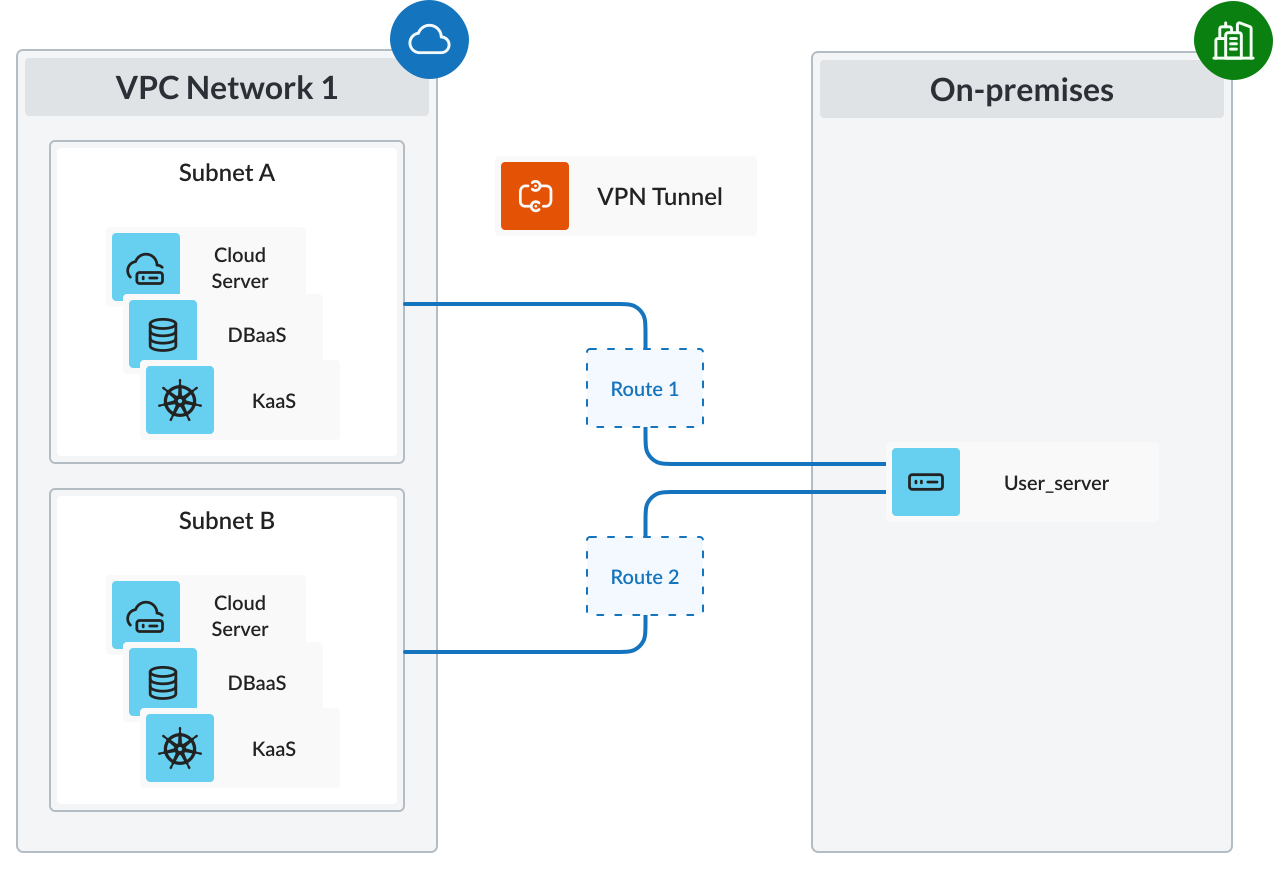
VPN Tunnels allow you to securely connect your company’s on-premises infrastructure with the Aruba Public Cloud, creating an extended private network across different environments.

Through an encrypted site-to-site VPN tunnel, local systems can communicate with resources within the VPC Network while maintaining high levels of security and operational continuity.

  • It enables the creation of hybrid architectures, where applications, databases, and services distributed between corporate data centers and the cloud operate as a single connected infrastructure.
  • It is useful for extending applications, integrating legacy systems, or maintaining communication between services distributed across company locations and the cloud.

Use case: orchestrating network components and services

Aruba Public Cloud network services allow you to design modular and secure infrastructures. Below are some examples of architectures that combine VPC Network, Elastic IP, Peering, and VPN Tunnel.

Multi-tier application architecture

An application can be distributed across multiple layers within the same VPC Network, using dedicated Subnets for frontend, backend, and database. Security Groups regulate traffic between application layers, while public access is managed through Elastic IP.

Development and production environments connected via Peering

Organizations can create separate VPC Networks for development and production while maintaining isolation between environments. With Peering, the two environments communicate through a private connection without passing through the public Internet.

Integration between cloud and on-premises infrastructures

A company can connect its data center to the Aruba Public Cloud through a site-to-site VPN Tunnel. The encrypted tunnel creates a private network between local systems and cloud resources, enabling secure communication within hybrid architectures.

Workload isolation for security and compliance

By creating separate VPC Networks, it is possible to isolate applications or sensitive data and apply dedicated security policies. When needed, VPC Networks can communicate through Peering, maintaining network segregation and control of traffic flows.


Hybrid Connect: extending connectivity beyond the Public Cloud

Private connections between cloud resources with dedicated servers, Private Cloud, colocation environments, and corporate infrastructures.

Aruba Public Cloud network features allow you to design secure and segmented infrastructures, controlling communications, traffic, and application layers.
With Hybrid Connect, you extend connectivity beyond the Public Cloud by integrating services across different environments and creating more flexible IT architectures with secure and controlled communications.

Design your network architecture in the Public Cloud

Create secure and scalable infrastructures by integrating cloud environments and on-premises infrastructures into a secure, controlled, and scalable network.

FAQs on Cloud network services

  • VPC Network is a virtual private network that defines the network perimeter of your infrastructure in the Public Cloud. Thanks to private addressing, Subnets, and Security Groups, resources communicate in a controlled way within an isolated environment. Learn more in the section VPC Network: the heart of the private network in the Public Cloud.

  • A standard public IP is directly associated with a resource and can change when the instance is replaced. An Elastic IP, on the other hand, is static and can be reassigned to different resources within the VPC Network, ensuring continuity in connections. Learn more in the section 'Configurable network components' in the VPC Network.

  • Yes. You can connect your on-premises infrastructure to the Aruba Public Cloud through a site-to-site VPN Tunnel, creating an encrypted connection between your data center and the VPC Network. This allows you to build hybrid architectures and integrate local and cloud systems. See the section VPN Tunnel: secure connection between cloud and corporate infrastructures

  • No. Peering uses a private connection within the cloud infrastructure, without passing through the public Internet. This reduces latency and maintains stable performance in communication between VPC Networks. More details in the section Peering: private connection between VPC Networks.

  • Il VPC Network gestisce la comunicazione tra le risorse all’interno del Public Cloud Aruba, collegando Database, Storage, Virtual Data Center e Kubernetes e permettendoti di definire Subnet, regole di sicurezza e flussi di rete.

    Per collegare il Public Cloud ad altri ambienti IT, come infrastrutture on-premises, Server Dedicati o risorse in colocation, puoi usare Hybrid Connect. Questo servizio crea una connessione privata tra ambienti diversi, permettendo di integrare Public Cloud, infrastrutture dedicate e reti aziendali.

    In questo modo puoi progettare architetture Hybrid Cloud in cui il VPC Network gestisce la rete interna, mentre Hybrid Connect estende la connettività verso altri ambienti.

Get started with Aruba Cloud

Looking for a custom solution?

Have a chat with our solution architects.

Get in touch